Precise and economical process for infrared-active gases
The non-dispersive infrared measurement method (NDIR) is a proven and highly precise method for analyzing gases in industrial processes. It is based on the absorption of infrared radiation by certain gas components such as CO₂, CH₄ and H₂S. This technology makes it possible to determine concentrations of these gases in real time and with maximum accuracy.
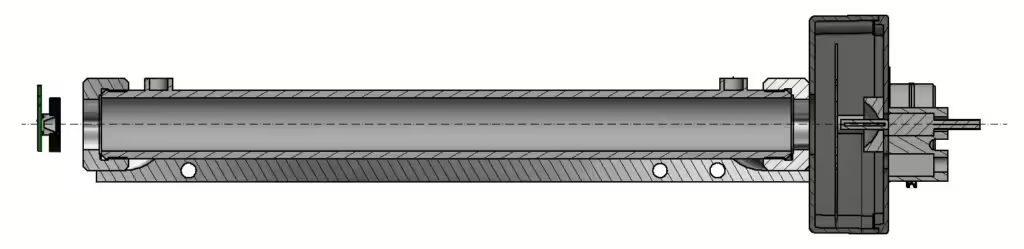
The NDIR method uses infrared radiation to analyze gases based on their absorption properties. A broadband infrared signal is passed through the measuring cell, which is generated by a pulsating or continuous IR emitter.
To modulate the measurement over time, the radiation is guided through an aperture wheel.
Within the measuring cell, there is a physical interaction between the infrared rays and the molecules of the gases to be detected, such as CO₂, CH₄ or H₂S. These molecules absorb the infrared radiation in specific frequency ranges that are characteristic of each gas.
Structure of an NDIR measuring cell
Note: This is an exemplary, simplified structure
Selection of absorption frequencies
Avoid cross-sensitivities
Measurement of the gas concentration
Each gas has a unique absorption characteristic. An optical filter is used to ensure that only the target gases are detected. This filters the infrared light incident on the sensor and limits it to precisely those frequencies at which the absorption typical of the gas takes place.
In some cases, the absorption frequencies of different gases overlap. This is called cross-sensitivity. This phenomenon can be minimized by a clever selection of frequency bands. Fresenius uses sophisticated filter technologies to ensure that only the intended gases are measured.
If the gas in the measuring cell absorbs the radiation, the intensity of the signal is reduced. The level of this reduction is directly proportional to the gas concentration. The measuring device compares the reduced intensity of the light with a reference signal without absorption in order to determine the exact concentration of the gas. When analyzing several gases simultaneously in one measuring cell, several detectors are used, each with its own optical filter.
Products with NDIR technology
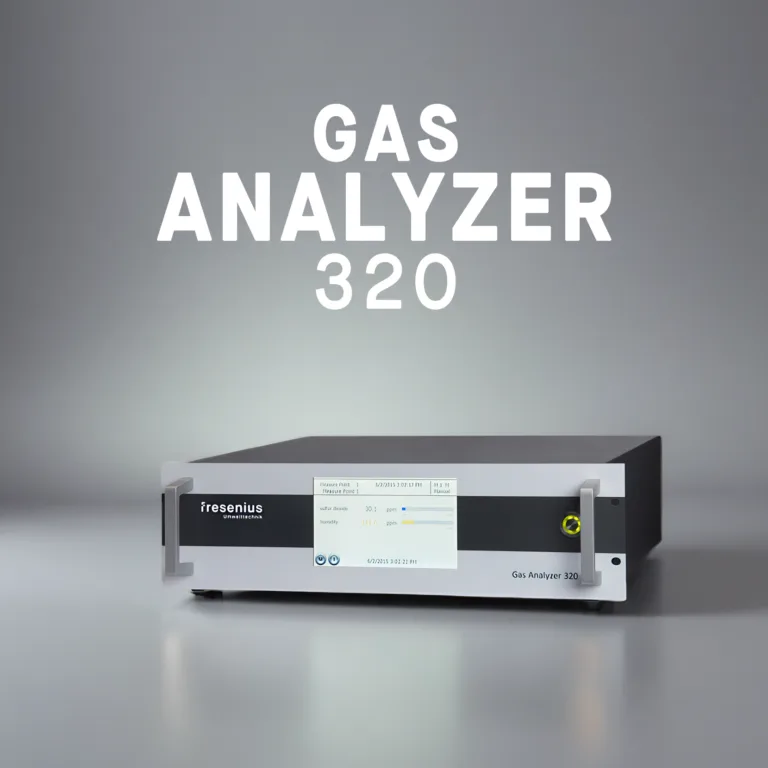
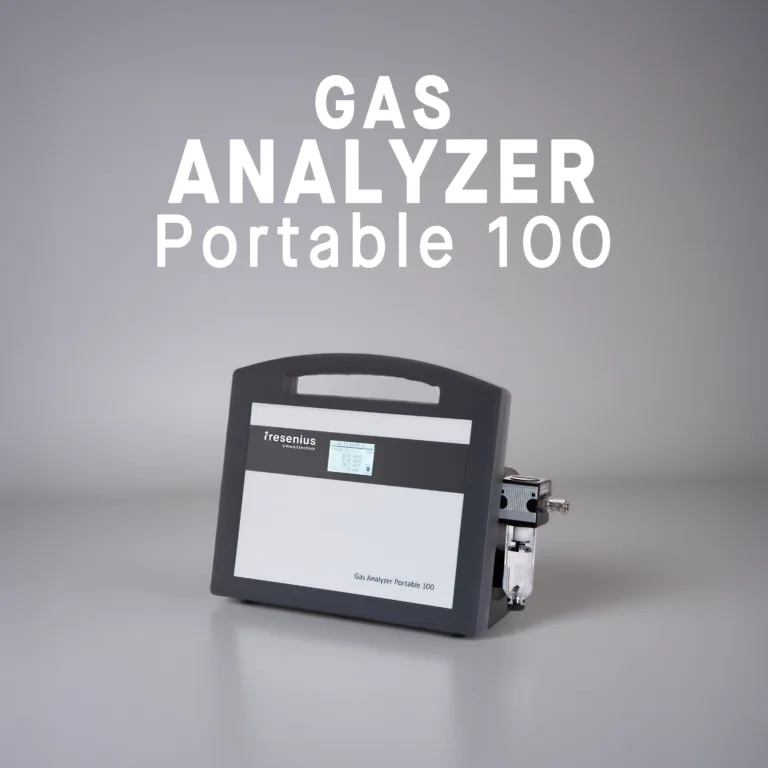
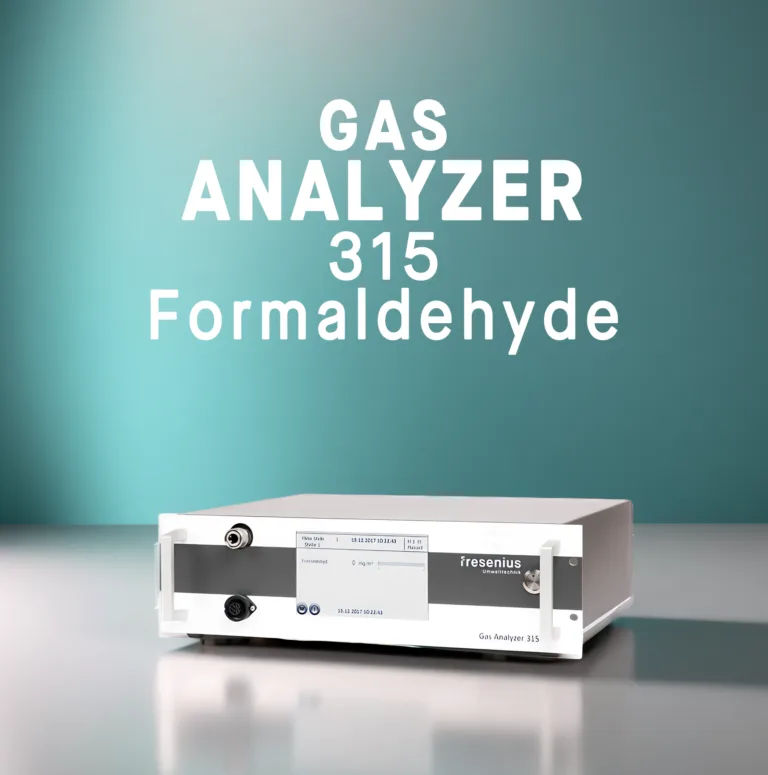
These products can use the NDIR method
Note: As our products are highly customizable, we offer different processes in each model, some of which can also be used in parallel.
Our NDIR systems offer an innovative automatic zero point correction that ensures measurements remain reliable over long periods of time. This feature reduces the need for manual intervention and calibration by continuously monitoring the zero point and correcting it when necessary. This means you can always be sure that your measured values are correct, which is particularly essential in critical applications. This not only saves time, but also costs, as expensive recalibrations are minimized.
Long-term stability
The long-term stable NDIR measuring cells from Fresenius guarantee exceptional calibration stability, even under difficult operating conditions. Thanks to the high-quality materials and patented design, the measuring cells are resistant to environmental conditions such as temperature fluctuations and pressure changes. For you, this means less maintenance, longer operating times and reliable results that you can rely on for years to come.
High precision
The high precision of our NDIR technology is due to Lambert-Beer’s law, which enables the exact determination of gas concentrations. Due to the specific absorption of infrared radiation by gas molecules such as CO₂ or CH₄, the concentration can be measured with an accuracy of up to 0.1 %. This is particularly important in applications where even the smallest deviations can have a major impact on the safety or efficiency of the process.